

Servers
Adding a server, status, HTTPS, moving to another server and reinstalling.
A server is your VPS that your domains' traffic goes through. It runs only the Caddy web server: links, templates and statistics are stored in TDS.SO, so you do not need to touch the server after changes in the dashboard.
Add a server
- Buy a VPS with Ubuntu — the cheapest plan is enough. Requirements and example providers are in step 1.
- In the dashboard, open Tools → Servers → Add Server, select My Server and Caddy.
- Copy the install command, connect to the server over SSH and run it.
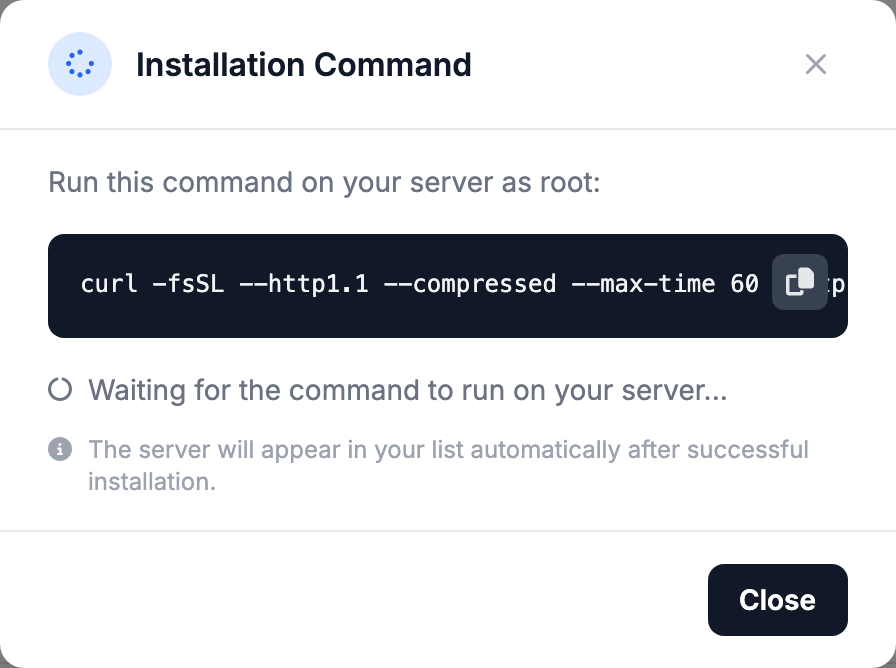
Installation takes a couple of minutes; you can follow its progress in the dashboard window. Detailed steps, including connecting over SSH on Windows and macOS, are in step 1.
Install Caddy on a clean server. If nginx or Apache is already running on it, the installer stops them and their sites stop opening.
Status
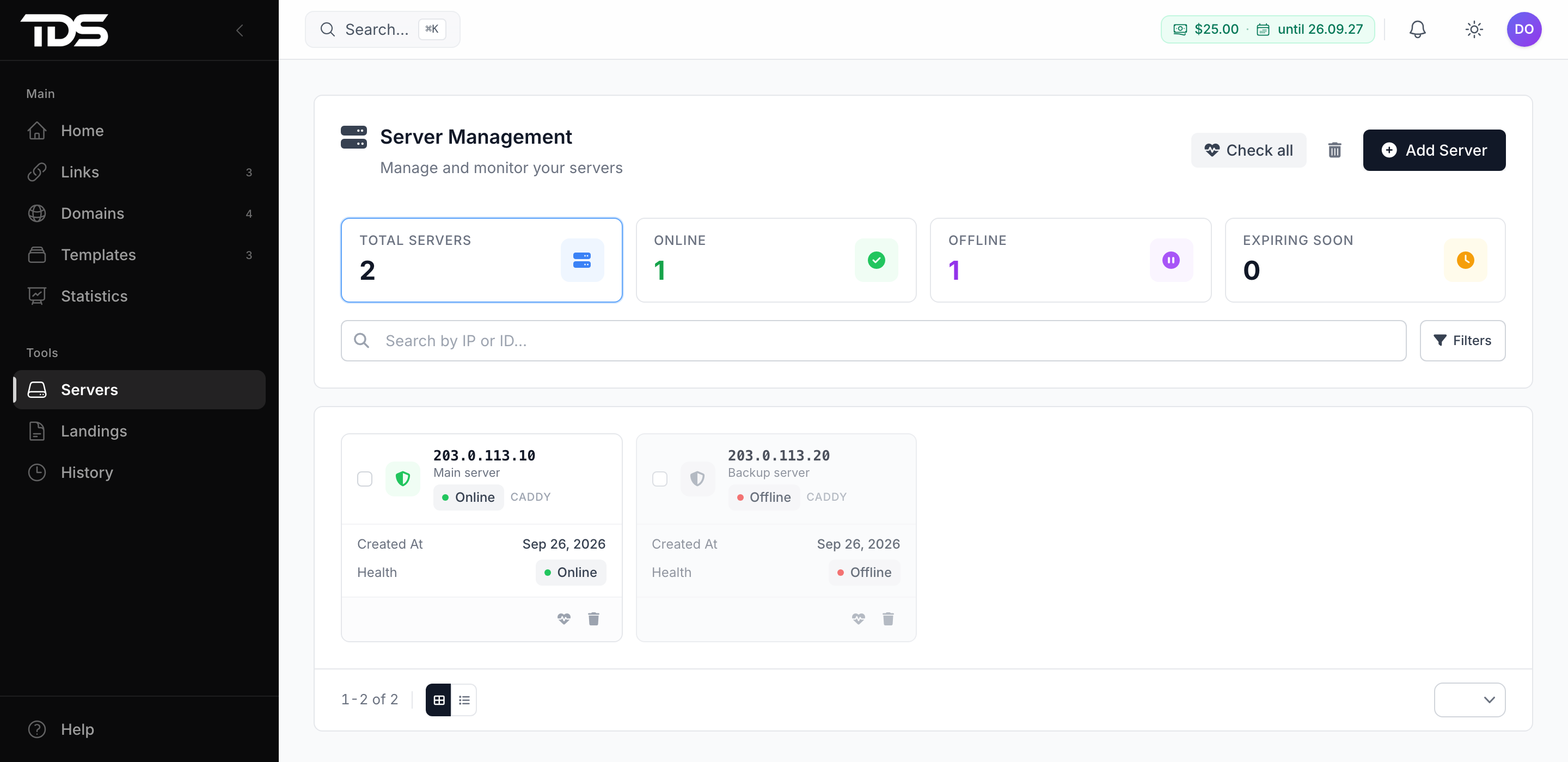
Online — the server accepts traffic. Offline usually means the server is turned off or port 80 is closed on it. The status does not refresh on its own: click Check health on the server card or Check all at the top of the page. The result is cached for 5 minutes, so clicking again sooner shows the same status. What to do if the server is offline is in troubleshooting.
HTTPS
Certificates are issued automatically and free of charge on the first visit to the domain over https:// — the first load can take a few seconds. If the domain is connected through Cloudflare, see the setup in step 2.
Multiple servers and moving
You can have any number of servers. A domain works through the server its A record points to — you do not need to link the domain to a server in the dashboard. To move domains to another server, install Caddy on the new server and change the domains' A records to its IP.
Reinstalling
If the installation was interrupted or the server's IP changed, run the install command again — the Caddy configuration is overwritten, certificates are kept. The dashboard cannot show the command for a server that is already added, and the command itself clears the terminal history. If you no longer have it, get a new one with Add Server and delete the old entry after installation — it stays "Offline".
Deleting
Deleting a server in the dashboard does not shut down the VPS itself: it keeps accepting your domains' traffic until you change their A records or delete the VPS at the provider.